 Tabby
The short version:
- CKD can't be cured, but it can be managed. Many cats live for years after diagnosis.
- The basics at home: a kidney diet, lots of water, and the medicines your vet prescribes.
- Weigh your cat every week and note appetite, water, vomiting and the litter box.
- Go back for lab rechecks as often as your vet asks. The trend matters more than one result.
My cat Maça lives with kidney disease and gets medicine every day. The diagnosis can feel overwhelming at first. This guide covers the practical side: what CKD is, what to do at home, and what to watch.
What is CKD in cats?
Chronic kidney disease (CKD) means the kidneys slowly lose their ability to filter waste from the blood and to hold on to water. It is very common in older cats.
CKD is progressive: the lost kidney tissue doesn't come back, and it usually gets worse over time. But it often moves slowly, and good care can slow it further. The goal is not a cure. The goal is a cat who eats, drinks, feels well and enjoys life for as long as possible.
IRIS stages in cats, in plain words
Most vets use the IRIS system to stage CKD. The stage is based on two blood tests, measured when your cat is stable and well hydrated:
- Creatinine, a waste product the kidneys should remove.
- SDMA, another marker that often rises earlier than creatinine.
Roughly, the stages look like this:
- Stage 1: blood values are normal or close to normal, but there are other signs of kidney trouble, such as dilute urine or changes on a scan.
- Stage 2: values are mildly raised. Many cats still seem completely normal.
- Stage 3: values are moderately raised. Signs like weight loss and poor appetite become more common.
- Stage 4: values are high, and cats often feel unwell and need more support.
Your vet also adds two substages, because they change treatment:
- Urine protein: whether the kidneys leak protein into the urine (measured with a urine protein:creatinine ratio, or UPC).
- Blood pressure: whether it is normal or high. High blood pressure can harm the kidneys, eyes, heart and brain.
Ask your vet which stage and substages your cat is in, and write them down. It makes every later conversation easier.
Common signs of kidney disease in cats
- Drinking more and peeing more (bigger clumps in the litter box)
- Weight loss, sometimes slow enough to miss
- Poor or picky appetite
- Vomiting or drooling
- Bad breath, sometimes with mouth sores
- A dull, scruffy coat and less energy
Older cats with an overactive thyroid can have CKD hidden underneath, so vets often check both. See our guide to hyperthyroidism and T4 in cats.
Home care: the four pillars
1. A kidney diet
Prescription kidney diets are lower in phosphorus and have controlled protein. They are one of the best-proven ways to help cats with CKD. Your vet will tell you when to start.
- Switch slowly, mixing a little more of the new food into the old one over a few weeks.
- Never let your cat go hungry to force the change. A cat who stops eating can get seriously ill. A cat eating anything beats a cat eating nothing.
- If your cat refuses every kidney food, tell your vet. There are other options, including phosphate binders mixed into regular food.
2. Water, water, water
Kidney cats lose a lot of water in their urine and dehydrate easily. Help them drink more:
- Feed wet food, and add a little warm water to it if your cat accepts it.
- Try a water fountain. Many cats drink more from moving water.
- Put water bowls around the house, away from the food and litter box.
- If your vet prescribes fluids under the skin, you can learn to give them at home. Our guide to subcutaneous fluids for cats walks through it.
3. Medicines your vet may use
Not every cat needs all of these. Your vet decides what your cat needs, and the dose. Common types are:
- Phosphate binders (for example aluminium hydroxide or lanthanum) are mixed into food. They only work when given with meals.
- Anti-nausea medicines (for example maropitant or ondansetron) help cats who feel sick or vomit.
- Appetite stimulants such as mirtazapine, which also comes as an ointment rubbed on the ear. Useful when pills are a struggle.
- Blood pressure medicine, most often amlodipine, if blood pressure is high.
- Medicines for urine protein (for example telmisartan or benazepril), if the kidneys leak protein.
- Potassium supplements, if blood potassium is low.
Several medicines at different times gets confusing fast. A cat medication chart helps, and if pills are a battle, see how to give a cat a pill.
Ask before adding anything. Some common medicines, including certain painkillers, can harm damaged kidneys. Check with your vet before giving any new medicine or supplement.
4. Regular rechecks
Your vet will set a recheck schedule, often every few months, sooner after a change in treatment. Typical checks are:
- Creatinine and SDMA, to follow kidney function
- Phosphorus, to see if the diet and binders are working
- Potassium, which often runs low in kidney cats
- Urine tests, including urine protein and infection
- Blood pressure
Keep every result. One number on its own says little. The direction over months tells you and your vet much more.
What to track at home
- Weight, every week. A baby scale or a kitchen scale for small cats works well. Slow weight loss is often the first sign that something is changing.
- Appetite: how much was eaten, and which food.
- Water intake: roughly, more or less than usual.
- Vomiting: when, and how often.
- Litter box: clump size and number. Bigger clumps usually mean more peeing.
- Energy and mood: playing, hiding, grooming.
Bring these notes to every vet visit. They fill the gaps between lab results.
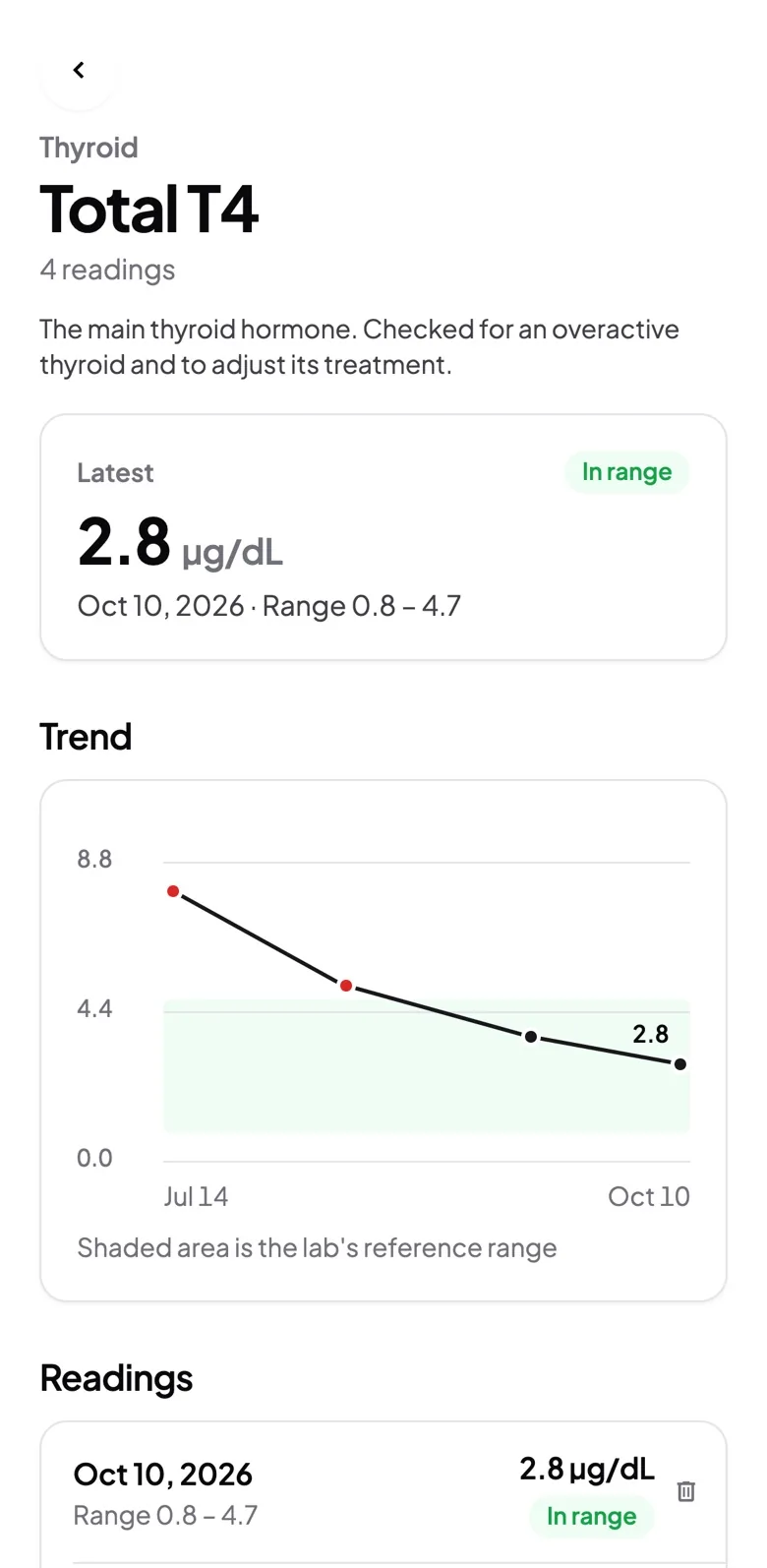
See where the numbers are going
Tabby keeps your cat's lab results as trend charts, next to daily logs for weight, appetite and vomiting. The medicine schedule is shared with the whole household, so everyone knows what was given and when.
When to call your vet urgently
- Your cat has not eaten for 24 hours or more.
- Your cat is vomiting again and again.
- Your cat is very weak, sleepy or hiding and won't get up.
- Your cat is not peeing, or straining in the litter box.
- Your cat suddenly seems blind, has wide pupils, is wobbly, or has a seizure. This can be a sign of very high blood pressure.
Questions people ask
How long do cats live with kidney disease?
It varies a lot. Cats diagnosed in an early stage often live for years with good care. In late stages, time is usually shorter. Stage, blood pressure, urine protein and how well your cat eats all matter. Your vet knows your cat's numbers and can give you the most honest picture.
Can kidney disease in cats be reversed?
No. The kidney damage in CKD is permanent and slowly gets worse. But treatment can slow it down and help your cat feel better. Blood values sometimes improve once a dehydrated cat gets fluids or another problem is treated, which is why your vet rechecks them.
What is the best food for a cat with kidney disease?
A prescription kidney diet, usually wet, is what most vets recommend, because it is lower in phosphorus. Switch slowly over a few weeks. If your cat refuses it, tell your vet. A cat eating any food is better than a cat eating nothing.
Is my cat in pain with kidney disease?
CKD is not usually described as painful in itself, but it can make cats feel sick: nausea, dehydration and mouth sores are common. Hiding, not eating or a hunched posture can mean your cat feels unwell. Tell your vet, because much of this can be treated.
This guide is general information from a cat owner, not veterinary advice. Always follow your vet's instructions for your cat's diet, fluids and medicines.