 Tabby
The short version:
- Hyperthyroidism means the thyroid makes too much hormone. It's very common in older cats and very treatable.
- T4 is the blood test that shows it. Your lab report shows the normal range next to your cat's result.
- After treatment starts, T4 and kidney values are checked again, often several times.
- Between visits, log weight, appetite, thirst and any side effects, and bring that log to every recheck.
What is hyperthyroidism in cats?
The thyroid is a small gland in the neck. It makes hormones that set how fast the body runs. In hyperthyroidism, the gland makes too much, so everything speeds up.
It's one of the most common hormone problems in cats, especially cats over about 10 years old. The cause is usually a benign (non-cancerous) growth on the thyroid. The good news: it's very treatable.
Signs to watch for
The signs come on slowly, so they're easy to miss in an older cat. Look for:
- Weight loss despite a big appetite. This is the classic sign.
- Drinking and peeing more than usual.
- Vomiting, sometimes soon after eating.
- Restlessness, or yowling at night.
- An unkempt, greasy or matted coat.
- A fast heart rate, which your vet may notice at a check-up.
Many of these overlap with other problems in older cats, like kidney disease or diabetes. Only a blood test can tell them apart.
What is T4?
T4 (thyroxine) is the main hormone the thyroid makes. Total T4 is the usual screening test, and it's often part of a routine senior blood panel. A high total T4 together with the signs above usually confirms the diagnosis.
Sometimes the result is borderline: high-normal, but your cat has signs. Then your vet may test free T4 as well, or repeat the test later.
Look at the range on your own report. Labs use different machines and units, so there's no single number that's "normal" everywhere. Your lab report shows the normal range next to the result. Compare your cat's results from the same lab where you can.
Treatment options
There are four main options. Each has pros and cons, and your vet will help you choose based on your cat's age, health and your situation.
- Methimazole. A daily medicine, given as a pill or as a gel rubbed on the inside of the ear. It controls the thyroid but doesn't cure it, so it's usually lifelong. See our guide on how to give a cat a pill if pilling is a struggle.
- Radioactive iodine therapy. A single treatment at a specialist clinic. It destroys the overactive tissue and is often curative. Your cat stays at the clinic for a few days afterwards.
- Iodine-restricted prescription diet. The thyroid needs iodine to make hormone, so a diet very low in iodine can control it. It only works if your cat eats nothing else, not even treats.
- Surgery. Removing the affected gland. It's less common today, but still an option for some cats.
Tracking T4 over time
Once treatment starts, rechecks are how you and your vet know it's working. A common pattern looks like this, but your vet sets the schedule:
- A recheck a few weeks after starting the medicine.
- Another recheck a few weeks after any dose change.
- Then every few months once your cat is stable.
The goal is usually to bring T4 back into the normal range on your lab report. Seeing every result side by side makes it much easier to spot when a number starts creeping up again.
Why the kidneys matter
This part surprises many owners. Hyperthyroidism speeds up blood flow through the kidneys, and that can hide kidney disease. Once the thyroid is under control, kidney values can rise and reveal a problem that was there all along.
That's why vets often check creatinine and SDMA again after treatment starts, together with T4. It doesn't mean the treatment caused kidney disease. If your cat's kidney values do change, our guide to cat kidney disease care explains what comes next, including subcutaneous fluids if your vet suggests them.
What to log at home between visits
Blood tests show a moment in time. Your notes fill in the weeks in between. Keep track of:
- Weight, weekly, on the same scale at the same time of day. Weight gain back toward normal is a good sign.
- Appetite. Is your cat still ravenous, or eating more normally?
- Thirst and litter box. More water or bigger clumps than usual are worth noting.
- Vomiting: when, and how often.
- Behaviour: restlessness, night yowling, energy level.
- Every dose of medicine, and any side effects.
Give the medicine at consistent times each day. If several people in the house help, a shared cat medication chart stops doses from being missed or doubled.
Methimazole side effects to report
Most cats do well on methimazole, but side effects can happen, often in the first weeks or months. Call your vet if you notice:
- Vomiting or not eating.
- Lethargy: your cat seems tired or flat.
- An itchy face, or scratching at the head and neck until it's sore.
- Unusual bruising or bleeding.
- Yellow gums, skin or eyes.
Don't stop or change the medicine on your own. Your vet will tell you what to do.
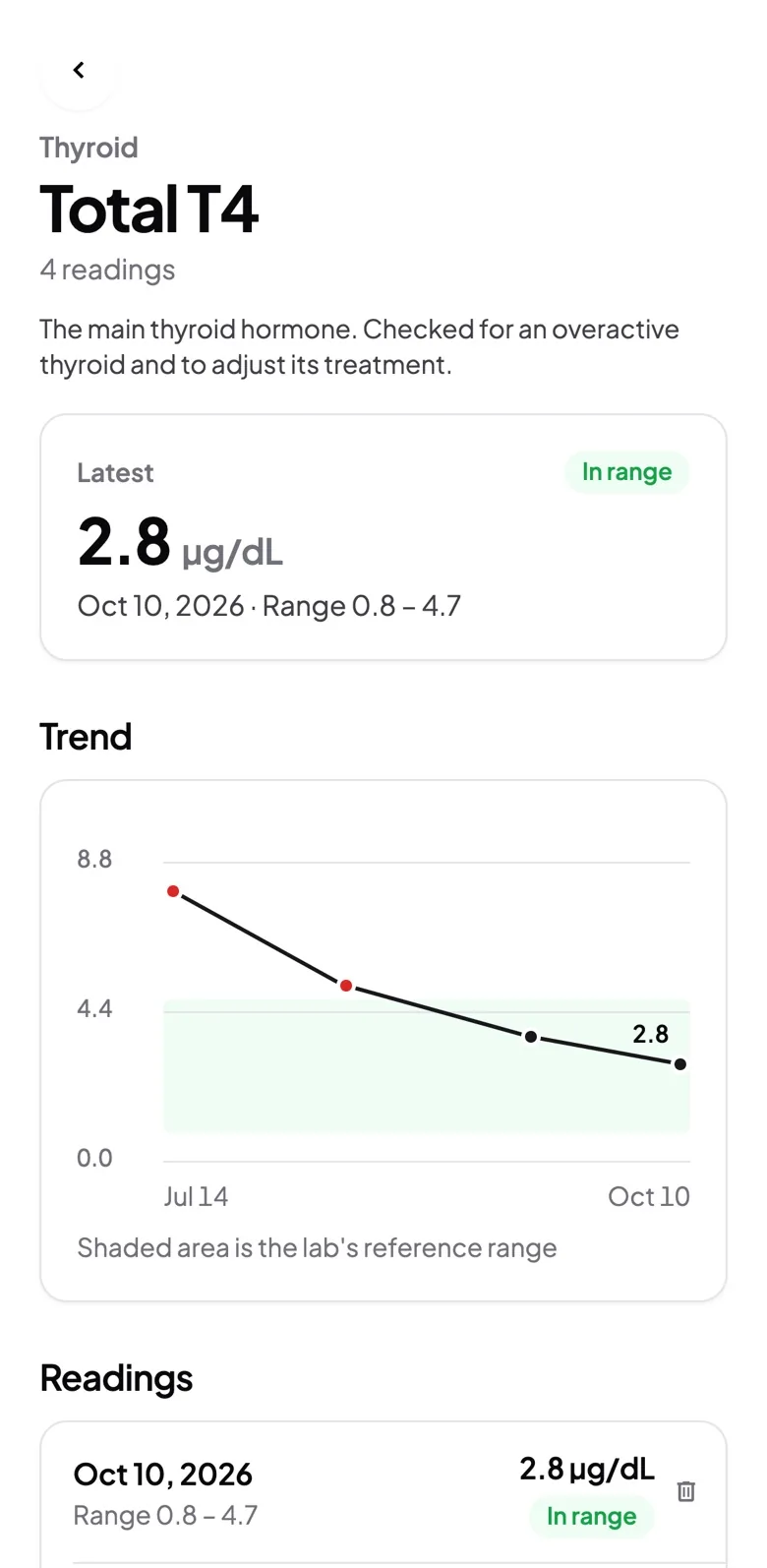
See the T4 trend, not just the last number
Add each T4 result to Tabby and see the trend over time. It sits beside the medicine schedule and the daily logs your household shares, so at the next recheck you have the whole picture in one place.
Bring your log to rechecks
Take your notes, or your phone, to every visit. A list of weights, doses and side effects helps your vet read the blood results and decide whether anything needs to change. It also means you don't have to remember everything on the spot.
Questions people ask
Can hyperthyroidism in cats be cured?
Sometimes, yes. Radioactive iodine therapy and surgery remove or destroy the overactive tissue, and radioactive iodine cures most cats. Methimazole and the prescription diet don't cure it. They control it for as long as your cat stays on them. Your vet will help you weigh the options for your cat.
How often should my cat's T4 be checked?
Usually a few weeks after starting or changing the medicine, then every few months once your cat is stable. Your vet sets the exact schedule, and it can change if your cat has other conditions like kidney disease.
Is methimazole ear gel as good as pills?
For many cats it works well and is much easier to give. Some cats absorb the gel differently, though, so T4 rechecks matter after a switch. Ask your vet whether the gel suits your cat.
How long do hyperthyroid cats live?
When hyperthyroidism is treated and well controlled, the outlook is generally good, and many cats live for years. It depends a lot on your cat's age and other conditions, especially kidney and heart health. Your vet can tell you more about your cat.
This guide is general information from a cat owner, not veterinary advice. Always follow your vet's instructions for your cat's diagnosis, tests and medicine.